

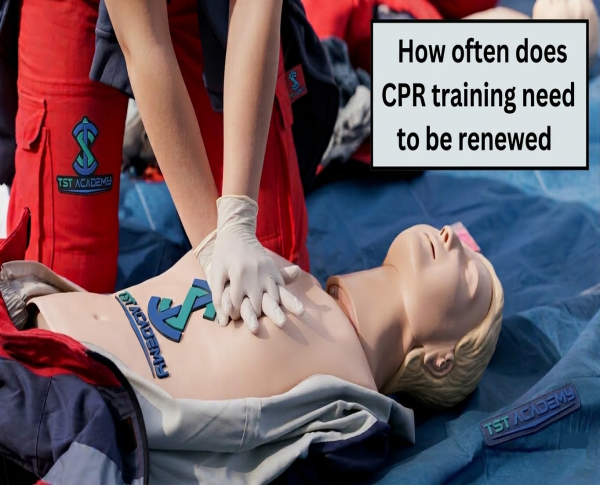
How often does CPR training need to be renewed

CPR is the art of saving lives in any crisis. The knowledge of how long a CPR certification lasts and why you need to renew it sets you up to face the real world. This broad guide covers everything from how long to hold your CPR certification to training options, such as CPR training, CPR certification online, CPR courses, and more.
What is CPR Certification
Official recognition that you had done this specific training regarding CPR or an emergency procedure restoring a victim of asphyxia or cardiac arrest to breathing and pulse is CPR certification. The CPR certification shows you possess the knowledge and skills to administer chest compressions, rescue breaths, and using an AED if one exists.
How Long Does CPR Certification Last
Normally, the period is two years from the date of issuance. However, to be safe, the date of the issuance organization must be consulted for exact validity because in some cases it depends on the location, industry, or organizational requirement. After two years are over, the certification becomes null and void, and again a fresh CPR course along with its renewal certification becomes a must update skills.
Why is CPR Certification Bad After a Period of Time
The time limit for the expiration of CPR certification is deliberate so that a person does not forget the skills. Health authorities and bodies that issue certifications-the American Heart Association (AHA) and the American Red Cross-continue to review and update CPR guidelines and procedures periodically.
What are the main reasons why CPR expires
Skill Loss: Research has shown that CPR skills tend to fade with time. You keep revisiting knowledge about crucial techniques through regular recertification.
Updated Policies: Revisions for guidelines for CPR and emergency cardiovascular care are made on a regular basis based upon the latest body of research. Certification renewal ensures the practicing professional remains aware of changes.
Maintaining Confidence and Competency: The actual practice of CPR helps maintain confidence in an emergency. A renewal certification revalidates the individual's capability to perform CPR correctly.
Available CPR Certification
If you need or prefer to renew your CPR training, you have choices: in-class CPR training, blended courses, and CPR training online.
1. In-Class CPR Training
In-class training pertains to Attending a local CPR class at a physical location, mostly delivered by certified trainers in hospitals, schools, community centers, or the workplace. So-called in-class CPR training is often always hands-on; this is quintessential for the development of skills. This approach provides:
Direct Instructor Feedback: Coaches will teach you proper methods and catch errors immediately.
Hands-on Application: You get to attempt CPR on yourself with mannequins.
Better Concentration: Classes in person take the distractions away so that all your attention is given for you to learn CPR.
2. Combination CPR Classes
There is a hybrid CPR course that consists of online study with a short, practical skills course. The students do the theoretical modules online and come to a short, practical skills course. Online CPR certification blended is the best option for busy schedules. It balances the advantageous ends such as convenience and hands-on practice.
Most companies currently offer online CPR training, which is well-suited for students since it is at their own pace. This flexibility is particularly useful in giving individuals with busy or restricted access to the centers a chance to be trained. Some of the online CPR certification courses involve no actual practice. For anybody wishing to take online CPR training remember:
You Clearly Know What Is Expected: Some of the courses will be partially delivered online but require hands-on examination to receive full certification for the course.
You Test Case Realities: The best online CPR courses employ video demonstrations and case study testing to guarantee that the students learn the real case application
Key Essentials of CPR Certification
CPR Skills Gained Through Courses
Through CPR, participants are trained on how to respond to emergencies involving the following:
CPR for Adults, Children, and Infants: There are different techniques of performing CPR between an adult, child, and infant.
Use of AED : Most courses of CPR instruct how to use an AED, which is very important in any case of a sudden cardiac arrest.
Relief from Choking: The relief for all ages from the choking is also taught as part of CPR training.
Each of these skills ensures improved survival chances during emergencies. Getting CPR certification is a sure way of preparing to provide basic support and assistance until help arrives.
Renewal of Your CPR Certification
Because CPR certification is typically valid for two years, many organizations have personnel or volunteers recertify their CPR skills periodically. Recertification courses, as one might expect, are typically shorter and cheaper than courses for an initial certification because there's usually nothing else to know and only a few skill practices. Here's how the recertification process typically goes for CPR
Make a Recertification Class Reservation: As you might expect, most organizations allow a reservation for a CPR recertification class at which the latest techniques and guidelines are learned.
Pretest for Practical Exam: Expect that there is a practical skill test. Anyone can practice CPR on a life-sized mannequin and use AEDs before the actual need arises.
Certificate Upon Completion and Certification Renewal: After passing the recertification course, you get a new CPR certification valid for two years.
CPR Recertification vs. New Certification
A renewal CPR course is typically much shorter than the principal certification course because it simply focuses on refreshing already-learned skills. Nevertheless, to be able to receive a renewal CPR certificate, one must be brought up to date on current protocols and must also practice on a mannequin. Depending on the organization, one might be required to complete the initial course again in order to have a renewed CPR certificate in case their certificate lapses past its expiration date.
CPR Certification Needs by Industry
The time and update requirements for CPR certification vary widely depending on the type of sector or industry. Among the sectors that require having CPR certification include: Healthcare In hospitals and clinics, nurses, doctors, and other medical staff are usually required to have up-to-date CPR certification. Hospitals usually have their own rules and regulations, but renewal of CPR certification is usually every two years.
School/Daycare/Camps : Most school/delivery daycare centers and summer camps insist that their staff have to be CPR certified, depending on the work involving children.
Emergency Responder: Police, Fire, and EMT have to renew their CPR certifications every two years.
Commercial/Office Environment: Some companies advance the staff for being CPR certified. Normally this happens when an organization has a high density of employees in a working environment.
Benefits of Remaining CPR Certified
There are several reasons why it is beneficial to remain CPR certified. They include:
Preparedness for Emergencies: Time-to-time retraining helps one to be prepared to act confidently and effectively in the event of an emergency.
Employability: Many employers require individuals to be CPR-certified employees. These are especially those individuals who work in health or education or those employees who interact with customers.
Rise in Survival Rates: Immediately administering CPR within minutes of the occurrence of cardiac arrest has been reported to raise the survival rates greatly.
Frequently Asked Questions about CPR Certification
1. Can I renew my certification online?
Yes, some organizations permit one to renew CPR certification online, ensuring that it is reputable whether an in person skills test is needed to be taken.
2. My CPR Certification Has Expired-What Do I Do?
If your CPR certification has expired, in most organizations, you have to retake the full course. On the other hand, some of them have a grace period during which it can be renewed; it is more advisable to renew them on time to prevent gaps.
3. Is an Online CPR Course Legitimate?
Yes, legitimate online CPR courses are available from approved agencies. Make sure the course you choose meets local or organizational requirements, as some workplaces or industries require hands-on training.
4. How long does it take to get CPR certified?
The length of time it takes to complete a CPR certification program varies depending on the program. Traditional in-person CPR classes usually last 2-4 hours while an online class takes longer, depending on your speed.
5. Are There Free CPR Classes?
Yes, there are free CPR classes available, but sometimes you may be charged for certification. Be sure the free program is accredited so that you do not face recognition issues.
Conclusion
The reason why CPR certification is of utmost importance for all those interested persons wishing to be well prepared in advance to face any emergency situation and make a difference in the lives of others is that while CPR certification lasts almost about two years, it's essential to keep renewing the same to maintain the skill levels and be updated with the latest guidelines. Staying certified, whether you choose in-person, blended, or online certification, will benefit you in every way, personal and professional. You would be able to act at the right moment when it matters most.
Then, consider your choices, select the correct CPR course, and ensure that you keep updating your certification. It could be next year or perhaps just next week when your knowledge and skills might come handy for helping someone in need.